

INCUBATOR by Rev. Ken Rickett
240

I am old enough to remember when, in 1957, Alan Shepherd was lifted into space and returned safely, although he did not orbit. Communication with the spacecraft was by “radio”, which we knew was a “bit more complicated” than the radios in our homes. Amazed at the apparent technology that made that feat possible, I remember the black and white television in our living room that depended on an antenna and the 1949 pickup truck with open windows for an air conditioner which was driven by my grandfather.
When John Glenn orbited the earth several times in 1962, I was at home and not at school because the night before this space adventure, the old wooden high school in our community had burned to the ground. I marveled at the stages of lift-off, the communications with Astronaut Glenn while our family still had the two-party telephone line. I remember the space center’s constant reference to computers that made all systems in the spacecraft respond to the nanosecond, so precise, so correct in all the calculations. And no grocery store nor bank at that time had anything computerized. I also remember, about this time, being invited to our neighbor’s house to watch “Bonanza” in color, being struck by the fact that the preceding and post programs were still black and white…the “bookends” of a brave new world emerging and affecting daily lives.
How I clearly remember the first astronauts on the moon in the summer of 1968. I was a summer youth minister between my freshman and sophomore years in college. Residing in a small house owned by the church, I had with me a group of several teenagers who, along with me, were glued to the TV watching the very first moonwalk as it happened. You could not ever imagine a group of teenagers so silent, so awed, so mesmerized by the drama unfolding before their eyes. The voices between the astronauts and Houston Space Center, a distance of 240,000 miles, stood in sharp contrast to the “land” phones in every residence, connected by telephone wires.
Fast forward to April, 2026, when four astronauts circled the back side of the moon and splashed down safely off the California coast. The world of 1968, the first moonwalk, cannot even begin to compare with the world of 2026 with satellite TV, smart phones with cameras and recording abilities at our fingertips, wi-fi connections to computers, online banking, school lessons online that prevent “snow days”, electric cars, modern cars with unbelievable luxuries such as tv, GPS, etc already built into the design and function…to name a few developments in recent years.
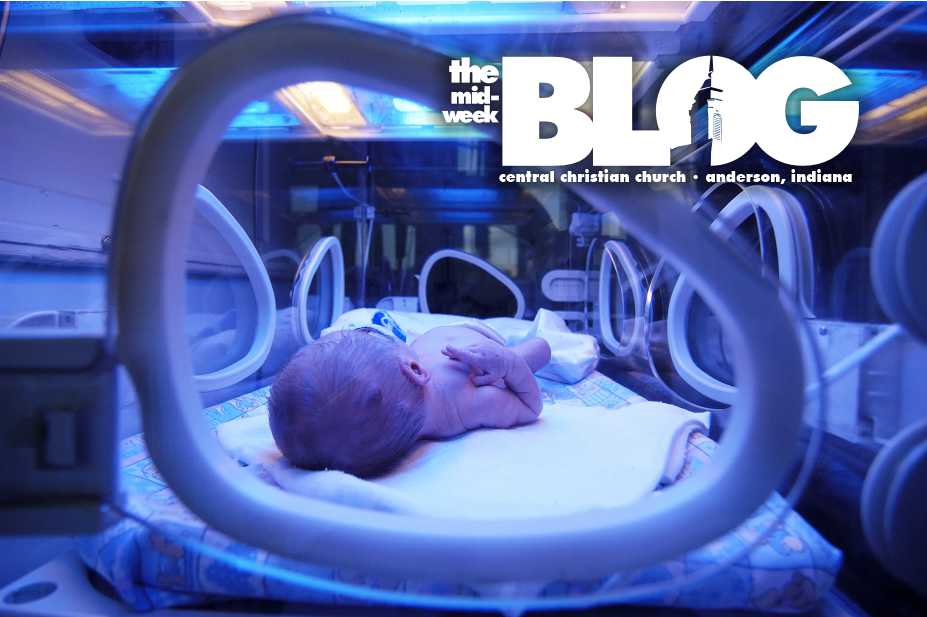
In the old days, the word “incubator” almost exclusively referred to a temperature-controlled machine that hatched eggs OR a machine that kept premature or ill newborn infants alive until they were able to live in the “normal” world. Nowadays, “incubator” refers to the efforts to design and grow new businesses, new ideas, new machinery or technology, etc. just like a hospital incubator allows a newborn to survive.
The first flight into space by Alan Shepherd in 1957 left me, a young lad of 9 years old, aware of the sharp difference between the intricate and precise technical abilities of the space program (three stage rockets, designing the material for the space capsule to re-enter the atmosphere safely, communication systems, etc.) that was so unfamiliar to everyday life at that time. Surely, this first flight was an incubator of a technological age yet-to-come. Frankly, I suspect that the very 1950s-era technology that lifted Shepherd into space is now, in some newly designed and creative way, an incubator for our technological daily life.
For decades, the ability to send a person into space and return safely was considered “rocket science”, that is, something separate from everyday life of the populace in the late 1950s. The early space program was, at that time, considered to be an incubator for future space development, not future everyday life…until now. Those who developed smart phones, iPADS, home and office computers, automobile upgrades, etc. which made some of that early technology available in everyday life. Consequently, the year 2026 is uniquely different.
The birth of Jesus of Nazareth was not the incubator of Christianity. The incubator of Christianity was the life, death, and resurrection of Jesus interpreted in a way that Jesus is the fulfillment of God’s promise of salvation for all humankind through faith in Jesus Christ, Son of God. Pastor Rick, in his Lenten Bible Study on Ephesians, helped us to grasp that the Apostle Paul who started congregations in cities far beyond Jerusalem was the incubator of the Church in which we have become servants of our Lord Jesus Christ today…in spite of the differences between Catholic and Protestant understandings of the Church of Jesus Christ.
We can no longer speak of the Church as something we pass on to the next generations. What the church unwittingly passes on to the next generation of church members is property, bylaws, traditions, vision, structure, etc. But the painful truth remains—we cannot pass on to the next generation a vital relationship with Jesus Christ and one another. Yes, we can model it and live it, but a relationship has to be foraged by love and grace by every believer. Neither can we pass down to the next generation of Church members the Spirit of the Living God Each and every person must open their lives to the “movement of the Spirit”…we need to understand that the Church in every generation is an incubator because God makes all things new. If our role is to “pass down” to future generations, then the more we are confronted with generations for whom the Church does not seem relevant or spiritually fulfilling. As incubators, we think less about the Church we pass on and more about the vital and renewing grace of God as revealed in Jesus Christ who enriches relationships every generation!
Weird, isn’t it…to imagine ourselves as incubators of tomorrow’s Church! And what will we do now with such a powerful image….?!